
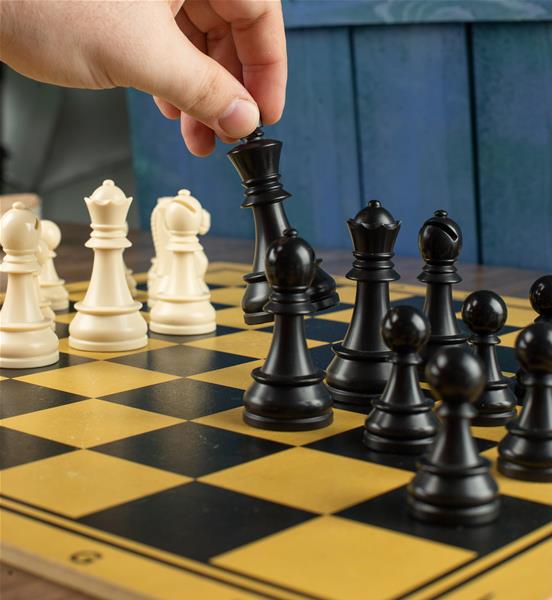
The Taliban government has suspended chess and the Afghanistan National Chess Federation this week and is reviewing the game, citing concerns over the game’s potential link to gambling.
“Chess in sharia (Islamic law) is considered a means of gambling,” sports directorate spokesperson Atal Mashwani told AFP. “There are religious considerations regarding the sport of chess. Until these considerations are addressed, the sport of chess is suspended in Afghanistan.”
Mashwani said the national chess federation had not held any official events for around two years and “had some issues on the leadership level”. According to TASS, chess has been gaining popularity in Afghanistan in recent years, and a group of activists has asked the government for funding to develop chess in the country in the days leading up to the ban.
“This is a suspension, not an outright ban, but it feels like the death of chess in Afghanistan,” a senior official from ANCF told The Telegraph. “Chess runs in the blood of Afghan society. You’ll find it in homes, cafes and even village gatherings. Afghans love chess, we’ve won international medals, and the game is part of our cultural identity.”
After the fall of Kabul to the Taliban in 2021, ANCF officials fled the country, and the Taliban appointed new leaders of the body. They were not approved by the international chess authorities and still recognise Ghulam Ali Malak Zad as ANCF head.
“The issue lies both with religious objections and leadership problems. The president of the federation fled abroad years ago but still interferes, which has caused chaos for players on the ground. The tussle between the Taliban and international chess bodies has left Afghan players caught in the middle,” the official clarified.
The Afghanistan National Chess Federation was established in 1984 and became a member of FIDE in 1988. The game had already been banned under the previous Taliban rule between 1996 to 2001. In 1996, the Afghan Olympic team went to Armenia for the Yerevan Chess Olympiad and found they could not return.
The ban is a part of several restrictions that the Taliban has imposed in Afghanistan since it seized power in 2021. Sports, culture and entertainment have also been subjected to heavy restrictions. Women have been banned from sport altogether, and contact sports have been affected when the Taliban introduced legislation prohibiting “face-punching”.
COURTESY: Insidethegames
 Extrasportnigeria
Leave a comment