
The International Olympic Committee is considering new eligibility rules that may bar transgender women from competing in female categories, The Times reported Monday. The proposal would also apply to athletes with Differences of Sex Development and could possibly be finalised early next year.
The twist marks a significant shift in the IOC’s approach to inclusion and fairness in women’s sport, as it follows years of debate among athletes, governing bodies and medical specialists over how to balance competitive equity with non-discrimination; particularly in sports where performance advantages linked to male puberty are considered relevant.
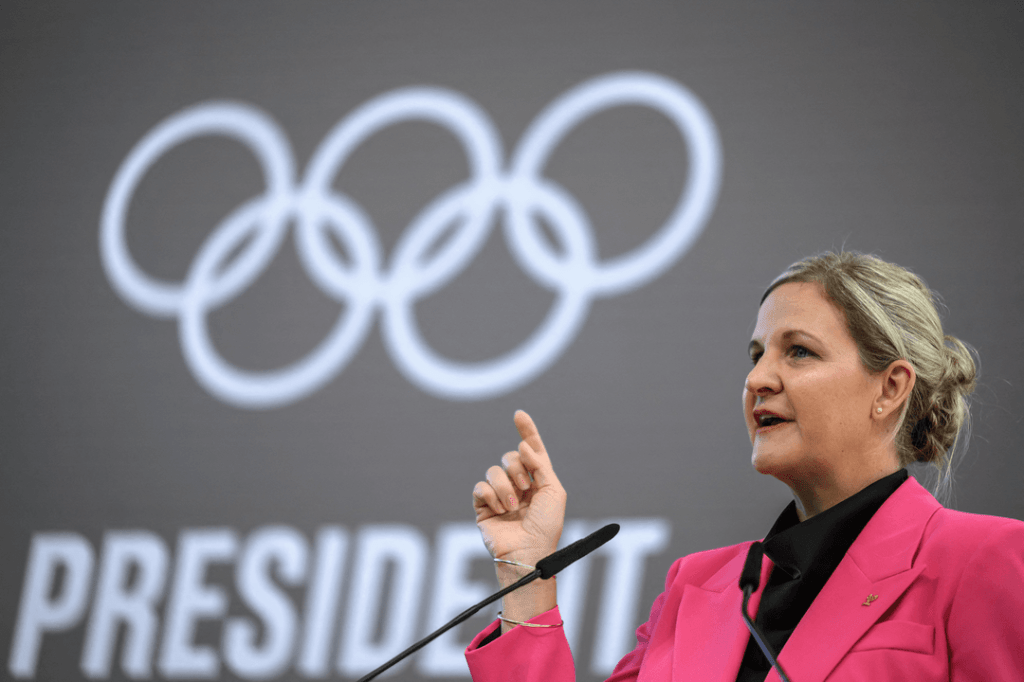
IOC Medical and Scientific Director Jane Thornton briefed members last week on the preliminary results of a scientific review commissioned to assess competitive fairness in women’s categories. The review forms part of ongoing work by the IOC working group established to examine the protection of female categories, one of the key priorities announced by IOC President Kirsty Coventry when she succeeded Thomas Bach in June.
In a statement, the IOC said discussions within the working group were continuing and that “no decision has yet been taken”. The organisation also indicated that further updates would be provided ‘in due course’.
Under current IOC guidance introduced in 2021, transgender women may compete in women’s categories if they meet specified limits for testosterone. However, full responsibility for eligibility decisions rests with international federations, which has resulted in a varied regulatory landscape, with different sports enforcing different criteria depending on their assessment of physical advantage, safety concerns or competitive integrity.
Several international federations have since taken steps to restrict participation: World Rugby became the first to prohibit transgender women who underwent male puberty from competing in elite women’s rugby, World Athletics has implemented similar restrictions in track and field, and World Aquatics allows transgender women to compete only if transition occurred prior to puberty. Other federations, such as World Boxing, have introduced genetic or chromosomal testing to determine eligibility.
The Times reported that Thornton’s presentation to IOC members suggested that physical advantages acquired during male puberty may persist even when testosterone levels are medically suppressed. The newspaper described the briefing as ‘very scientific’ and data-driven, citing sources who indicated that the review placed emphasis on measurable strength, power and endurance outcomes.
Insidethegames
 Extrasportnigeria
Leave a comment