
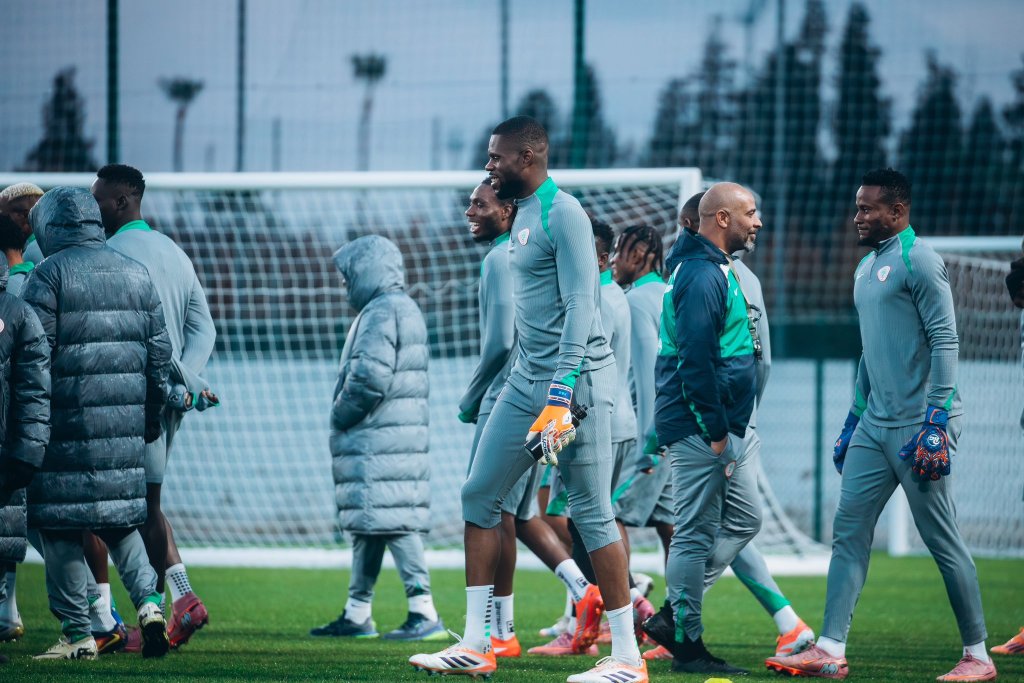
By Paul Lucky Okoku
●Beyond the disappointment lies a silver lining: an opportunity to close the tournament with pride, purpose, and renewed belief.
When a team goes toe-to-toe with a host nation for 120 minutes, the result may be a loss – but the performance is a statement. This was not the end of a journey; it was a proving ground.
Taking a host nation the distance in an AFCON semi-final is among the hardest assignments in African football.
For 120 minutes, the Super Eagles were organised, disciplined, and resilient. They defended with intent, competed intelligently in midfield, and stayed in the contest without panic. That alone is an achievement. When a match reaches penalties, the truth is simple and universal: it becomes a 50-50 proposition. On that night, the balance tipped the other way. It happens, even to the best teams.
What matters is how a team arrives at that moment. Nigeria arrived composed, intact, and credible.
What the match truly said about this team
This semifinal was not defined by chaos or collapse. It was defined by control versus containment.
Nigeria’s structure held; the defensive block, led by Calvin Bassey, was compact. The back line communicated well. The goalkeeper, Stanley Nwabali, stood tall. Against a host side that circulated the ball patiently and pressed for openings, Nigeria did not fold. They absorbed pressure and resisted breakdowns. That speaks to preparation and clarity of instruction.
Equally important, the team did not abandon its shape late in the game. Many sides lose discipline when fatigue and urgency collide. Nigeria did not. They stayed measured through extra time, which is why the contest remained scoreless. This was a performance of mental endurance where fine adjustments can elevate the response.
Turning relief into sustained possession
Nigeria’s possession phases were effective in transition but often brief. Against elite opponents – especially hosts – short possession spells increase defensive load. Ahead of Egypt, the Super Eagles can benefit from longer retention sequences in midfield: recycling the ball, switching play, and creating pauses that reset the tempo.
This is not about dominating the ball. It is about giving the defence breath and pulling opponents out of their comfort zones.
Effort in the attack was evident. What can improve is timing and connection. The best chances come when runs, passes, and positioning align in rhythm. Against Egypt, clearer patterns – early releases, third-man runs, and better spacing between lines – can turn promising moments into decisive ones.
This is a collective tune-up, not a critique of personnel.
Set-Piece Threat as a Competitive Lever
In matches where open play is tight, set pieces are opportunities to tip the margins. Nigeria can look to add variation and intent on corners and wide free kicks -screens, delayed runs, near-post disguises – to create uncertainty and second-ball chances. Set pieces are planning, not power.
The Penalty Conversation—Put in Its Proper Place
Penalty shootouts are not indictments. They are psychological contests decided by preparation, familiarity, and nerve.
This one went the other way. It happens. The takeaway is not regret; it is readiness. The more penalty scenarios are normalised in training—under noise, fatigue, and time pressure – the less alien the moment feels when it returns. And it will return.
That lesson is universal, not unique.
Egypt versus Nigeria: What this means
The third-place match is not a consolation; it is an opportunity.
Egyptians are experienced, organised, and proud. They understand tournament football. Nigeria, however, enter this fixture with something powerful: proof. Proof that they can stand firm against the hardest conditions. Proof that their structure works. Proof that belief remains intact.
The task now is to convert resilience into assertion – to play with the same discipline, add a touch more continuity in possession, and approach attacking moments with calm conviction. If Nigeria do that, they will not need perfection. They will need composure.
Closing Perspective
This semi-final did not diminish the Super Eagles. It clarified them.
They are competitive. They are prepared. They are learning in real time. And they have one more match to affirm that growth on the AFCON stage.
Football rewards teams that respond well. Saturday is an invitation to do exactly that.
1984 AFCON semifinal: Nigeria vs Egypt
• The match took place in Abidjan during the 1984 Africa Cup of Nations.
• Full-time score: Nigeria 2–2 Egypt (after regular time).
• The game was decided by a penalty shootout, which Nigeria won 8-7 to advance to the final.
Goal Scorers:
• For Nigeria: Stephen Keshi (43′, penalty), Bala Ali (75′).
• For Egypt: Imad Soliman (25′), Taher Abouzaid (38′).
This performance helped Nigeria reach the final, where they finished runners-up to Cameroon (3-1).
1984 AFCON final positions
• Champions: Cameroon
• Runners-up: Nigeria
• Third place: Algeria
• Fourth place: Egypt
Third-Place Match (1984)
• Algeria defeated Egypt 3–1 in the third-place match.
AFCON has a way of folding history back onto itself.
In AFCON 1984, Nigeria and Egypt crossed paths at a critical stage of the tournament. Nigeria emerged victorious in the semi-finals, asserting itself against a seasoned North African opponent. Yet football, as it often does, delivered its own twist. The Super Eagles would later fall short in the final, earning silver medals after a hard-fought loss to Cameroon 🇨🇲 and finishing runners-up overall.
I was a part of that 1984 campaign. I lived the pressure, the expectation, and the emotional swing that defines tournament football – where a single match can reshape how an entire journey is remembered.
There is a deeper layer of irony. A year earlier, in 1983, I was also part of the Nigerian team that travelled to Rabat, Morocco 🇲🇦, and defeated the host nation on their own soil. Anyone who has played against a North African team at home understands what that truly means. It is never just eleven against eleven. It is atmosphere, belief, officiating rhythms, and history pressing down on you. Winning there required courage, composure, and collective resolve.
Fast-forward to AFCON 2025, and Nigeria has once again gone head-to-head with North African opposition – first Morocco, now Egypt. These are teams that thrive on structure, tactical discipline, and emotional intensity. Egypt, in particular, will come into Saturday’s match swinging. Need we be reminded that Mohamed Salah of Liverpool FC anchors their belief and ambition? They know how to respond after disappointment. They know how to frame third-place matches not as consolation, but as redemption.
That is why this fixture is more than a bronze-medal playoff. For Nigeria, it represents pride.
For the players, it is a chance to close the tournament with authority.
For the team, it is an opportunity to extract a silver lining from a demanding campaign.
As the saying goes here in the United States, the Super Eagles must step up their game to show up, to perform with clarity, purpose, and conviction. What Nigeria must avoid is allowing Egypt to rain on their parade—not with anxiety, not with overreach, but with belief in the work already done. Third-place matches often reveal character more clearly than finals, because motivation must come from within.
History reminds us that Nigeria has been here before.
Experience reminds us that these moments matter.
And football, once again, is offering the Super Eagles a chance to define how this chapter will be remembered.
AFCON 1984: WHEN THIRD PLACE CARRIED ITS OWN MEANING
The significance of the third-place match is not theoretical; it is historical.
At the 1984 Africa Cup of Nations in Côte d’Ivoire, Algeria claimed third place, defeating Egypt 3–1 on March 17, 1984. It was a match defined by intent and response, not resignation.
If this article added value or offered a perspective, you’re welcome to share it with others.
Paul Okoku is a former Nigerian International Footballer | Football Analyst
• CAF Africa Cup of Nations (AFCON) 1984 – Silver medalist
• WAFU Nations Cup 1983 — Gold medalist
• CAF Tesema Cup (U-21) 1983 — Gold medalist
• FIFA U-21 World Cup, Mexico 1983 — Vice-Captain, Flying Eagles of Nigeria (Class of 1983)

 Extrasportnigeria
Leave a comment