
By Editor
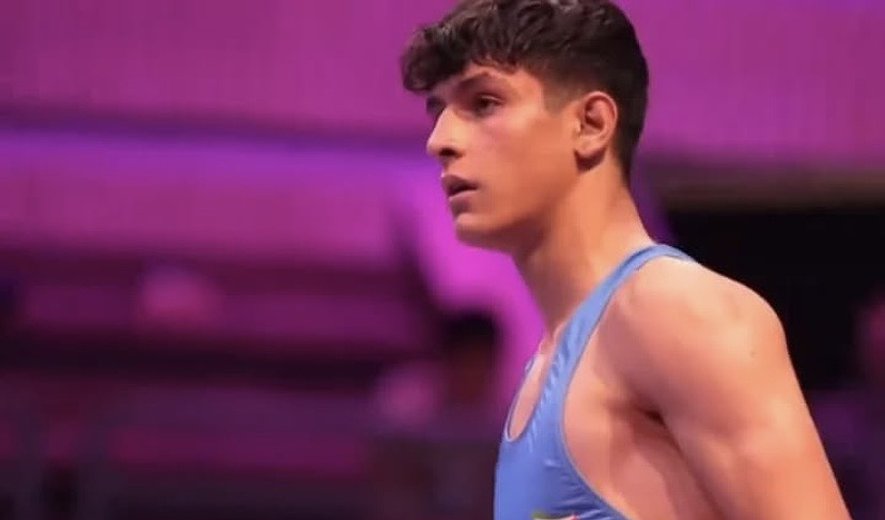
The Iranian regime, led by Mojtaba Khamenei hanged young wrestler, Saleh Mohammadi on Thursday. Mohammadi has represented his country internationally and was held over his alleged involvement in the protests that shook the nation last January.
The execution, in which Iranian citizens Mehdi Ghasemi and Saeed Davoudi were also killed, followed a judicial process marked by intense controversy and allegations of irregularities. Insidethegames reports that the Iranian authorities maintain that the three men were responsible for the killing of two police officers during the demonstrations on 8 January in the city of Qom, amid growing social tension shaped by the war now involving Iran, the United States and Israel. According to the official version released by the national Mizan news agency, they acted in coordination and were armed with knives, in what the regime frames as part of its response to violent acts during the protests.
However, human rights organisations and activists flatly challenge that account. Amnesty International Iran stated that the young man was denied “an adequate defence and was forced to make confessions,” while Iran Human Rights says the self-incriminating statements were obtained under coercion. The organisation underlines that the court dismissed Mohammadi’s own complaints, as he said he had been tortured and even retracted his confession before the judges.
The case has revived criticism over the use of the death penalty in Iran and over the lack of due process in cases linked to dissent. Iran Human Rights insists that the proceedings failed to meet minimum standards of justice and denounces the absence of conclusive evidence, restrictions on access to independent legal counsel, and the lack of any genuine possibility of appealing the sentence.
Nima Far, an Iranian human rights activist and athlete, believes the execution was part of a strategy of intimidation. “His execution was a blatant political murder, part of the Islamic Republic’s pattern of targeting athletes to crush dissent and terrorize society,” he said in remarks reported by American network Fox News. In his view, such actions are not isolated but form part of a pattern intended to send a deterrent message to the public, especially to public figures such as athletes.
Far also criticised the international response and, in particular, that of sporting institutions. “The IOC and UWW should have intervened forcefully with public ultimatums… rather than relying on ineffective quiet diplomacy,” he told Fox News, calling for tougher measures such as excluding Iran from international competitions unless the executions of athletes and protesters cease.
The young wrestler, who had won a bronze medal in 2024 at the Saytiyev Cup held in Krasnoyarsk, Russia, argued during the trial that he had not taken part in the acts of which he was accused and that, at the time of the crime, he was at a relative’s house. That alibi was rejected by the court, which based the conviction on his initial confession and on the testimony of alleged eyewitnesses, according to Iran Human Rights, in a case in which Mohammadi was found “guilty of murder and of carrying out operational actions on behalf of Israel and the United States” and of ‘enmity against God’.
Various reports point to contradictions even over how the sentence was carried out. While some sources indicate that the hanging was carried out in public, others maintain that it ultimately took place inside a prison in Qom. In any event, the execution took place just hours after the United States Department of State had called for it to be suspended, an appeal the Iranian authorities did not heed.
The case has triggered a wave of reactions within the international community and among figures from the sporting world. According to Fox News, activists and Iranian athletes in exile had unsuccessfully called for the execution to be halted, warning of the danger facing Mohammadi. The activist Masih Alinejad said on social media that the regime had broken previous promises to halt the executions of protesters and underscored the gravity of the context in which the young man’s death took place.
Human rights organisations warn of an increase in executions following the mass arrests carried out during last January’s protests. According to Iran Human Rights, the number of confirmed deaths after the protests stands at more than 3,400. Other independent sources suggest the real figure could exceed 30,000.
The memory of precedents such as that of the wrestler Navid Afkari, executed in 2020 despite international pressure, reinforces the perception that sport has become an especially sensitive arena for repression. Mohammadi’s death is seen as a symbol of the harshness of the regime’s response to any form of dissent, in a country where wrestling is also one of the most emblematic sports.
InsidetheGames
 Extrasportnigeria
Leave a comment