
Admin
The IOC will still let transgender athletes compete in the category of their biological sex.
While the International Olympic Committee’s latest policies are being touted as a blanket ban, the organisation clarified on Friday that they are eligible to compete in the Games — but in a category that aligns with their biological sex.
The global governing body announced new eligibility requirements exclusively for women on 26 March, including a one-off Sex Determining Region Y gene test. The mandatory screening will determine if the athlete will be eligible for the women’s category and effectively bars biological males from competing as the gender they identify as. The Policy on the Protection of the Female (Women’s) Category in Olympic Sport will be in effect from the Los Angeles Summer Games in 2028 and beyond. It will also be implemented in the Youth Olympic Games from 2030 onwards, Insidethegames reports.
Following weeks of criticism, praise and concern, the IOC released an FAQ this week to respond to some of the facts and misconceptions surrounding their decision. The organisation stressed that the policies are a result of “feedback … from across the Olympic Movement, including International Federations (IFs) whose sports have been on the Olympic programme for a long time, as well as athletes from around the world.”
The sporting body explained why it chose the genetic test, saying the ‘SRY gene is highly accurate evidence of sex’, but clarified that the screening alone is not the determining factor for eligibility, but rather, to establish a medical diagnosis. “Further evaluation should be made available to athletes who screen positive to determine whether they have CAIS or another rare XY-DSD that precludes testosterone’s anabolic and/or performance-enhancing effects. If an athlete establishes this, they will be eligible for competition in the Female Category,” the IOC furthered.
The IOC expanded on its decision regarding athletes with differences (or disorders) of sex development, such as Olympic champion Caster Semenya, who the policy treats in the same manner as transgender athletes. “Transgender women and athletes with an XY-DSD have the same biological characteristics, namely: both have XY chromosomes, the SRY gene, testes and male-level testosterone, to which their bodies typically respond. These characteristics are responsible for male sex development and result in a performance advantage,” the organisation explained.
However, the IOC said there would be rare exceptions and also touched on Complete Androgen Insensitivity Syndrome and another rare condition that precludes typical male sex development, saying the athlete has the chance to undergo further evaluation should their SRY test be inconclusive.
The Olympic body also broached on legal issues, suggesting athletes from countries that prohibit the gene test, such as Norway and France, go abroad to be screened. Athletes from countries that are not equipped to manage the tests are also encouraged to go abroad.
The IOC also broached the topic of costs, saying the organisation’s revenue is distributed “to the global Olympic Movement to enable the Sports Governing Bodies to support their athletes in their preparation for the Olympic Games”, and the IOC will be organising seminars that will cover how to finance the screening.
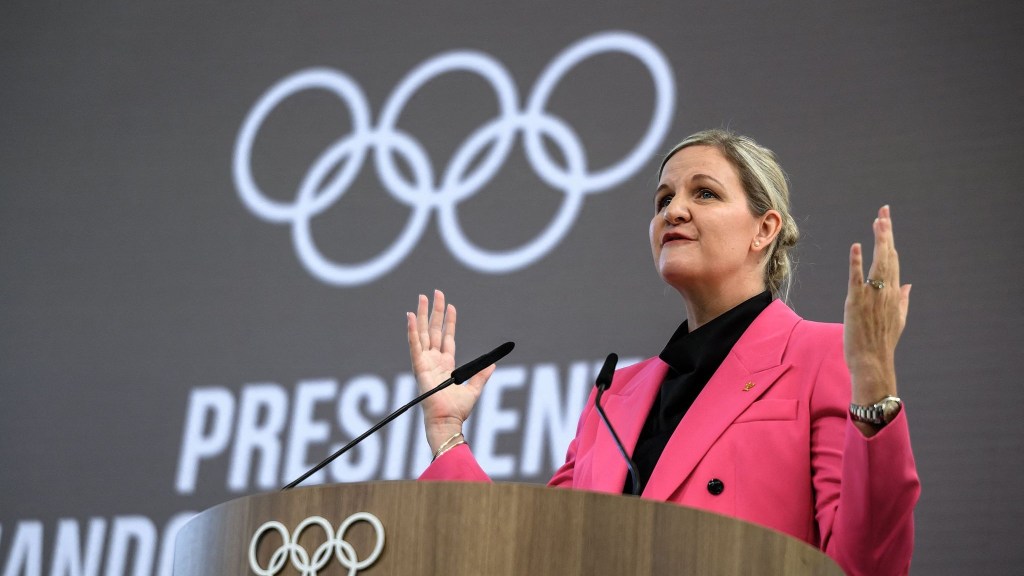
Photo: IOC’s Coventry
Insidethegames
 Extrasportnigeria
Leave a comment