
●A deep and quiet warning for Diaspora talent
Pius Ayinor
In international basketball, the biggest decisions are often made long before the spotlight arrives. For many dual-nationality athletes, the choice of which country to represent can quietly determine whether they become a global star – or remain on the margins of opportunity.
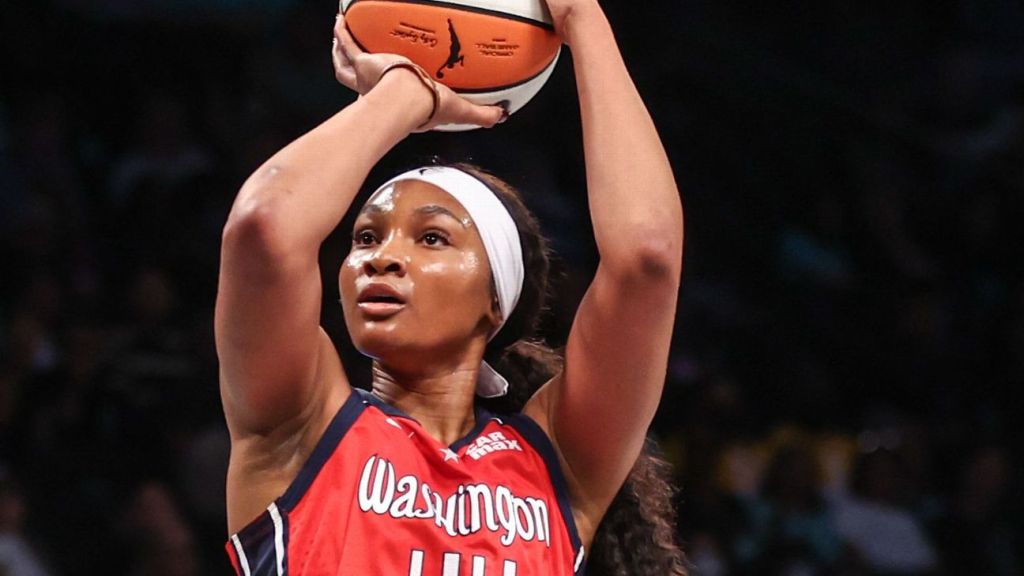
A recent case involving rising basketball prospect Kiki Iriafen highlights a growing dilemma facing players of African descent navigating between heritage and the allure of the American system.
When Opportunity Knocks — and Hesitation Answers
For emerging talents with Nigerian roots, interest from the national team is rarely casual. It often comes with a clear pathway: meaningful minutes, defined roles, and the chance to compete on major international stages.
Nigeria’s women’s programme – anchored by the dominance of D’Tigress – has steadily built a reputation as Africa’s standard-bearer. For many players, joining that setup represents more than selection; it offers identity, responsibility, and legacy.
But for athletes also eligible to represent the United States, the calculus becomes complicated.
The appeal of the United States women’s national basketball team is undeniable. It is the most competitive program in the world, stacked with elite talent and global visibility. Yet that same depth is what makes it unforgiving.
The Illusion of Proximity
Being invited into the U.S. national team pipeline can feel like standing at the edge of greatness. Training camps, qualifiers, and preliminary rosters signal proximity to the highest level. But proximity is not access.
The pathway to final rosters – whether for the FIBA Women’s Basketball World Cup or the Olympic Games – is brutally narrow. Even established stars struggle to secure consistent selection, and for emerging players, the margin for error is almost nonexistent.
Many find themselves caught in a cycle:
• Good enough to be invited
• Not established enough to be selected
• Too committed to pivot elsewhere
A Door That Rarely Reopens
International basketball is governed by strict eligibility rules. Once a player represents a country at the senior level in official competition, switching allegiance becomes extremely difficult – often impossible in practical terms.
This creates a high-stakes reality: a single decision can permanently close alternative pathways.
For players who choose the United States but fail to break into final tournament teams, the consequence is not just missed selection – it is missed participation entirely.
A Pattern Worth Noticing
This is not an isolated situation. It reflects a broader trend affecting players of Nigerian descent and, increasingly, athletes from across Africa.
The pattern is becoming familiar:
• Early recruitment into the U.S. system
• Limited appearances in qualifiers or camps
• Difficulty breaking into final rosters
• Loss of eligibility for other national teams
The result is a generation of talented players caught between two systems – fully belonging to neither at the highest level of competition.
What Nigeria Represents
Choosing Nigeria is not simply an alternative; it is a different kind of opportunity.
It offers:
• Immediate integration into a competitive national team
• Significant playing time in major tournaments
• A realistic path to global competitions, including the Olympics
• The chance to help elevate a program representing an entire continent
In an era where global basketball is expanding, the value of that platform should not be underestimated.
A Decision Beyond Basketball
At its core, this is not just about sport. It is about understanding opportunity in its fullest sense.
For Diaspora athletes, the choice is often framed as:
• Prestige vs. probability
• Exposure vs. impact
• Potential vs. participation
But those distinctions can be misleading.
Because in international basketball, the ultimate currency is not where you can play—it is where you actually do.
Final Thought
The story of players navigating these decisions should not be viewed as criticism, but as clarity.
For the next generation watching closely, the lesson is simple:
Choosing a path is not just about chasing the highest level—it is about choosing the pathway that allows you to truly compete, contribute, and be seen.
And just as a matter of additional, D’Tigress are on a playing tour of the USA starting with the game on Saturday, April 25th against WNBA team, Los Angeles Sparks.
 Extrasportnigeria
Leave a comment