
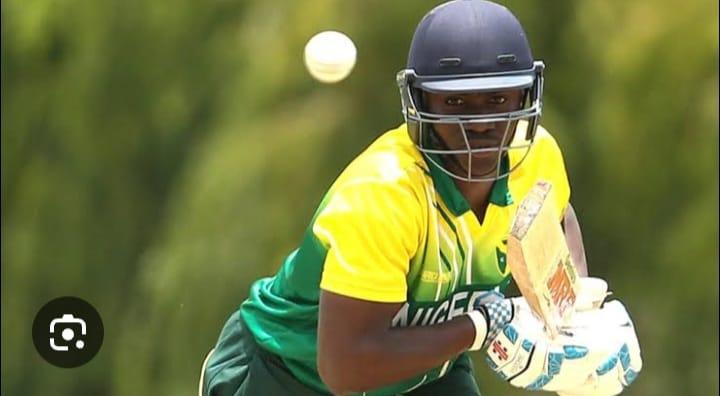
Mr Rugby believes that a standalone festival will strengthen Nigeria’s pipeline for global success after Enugu 2026
Editor
The 23rd National Sports Festival, the Coal City Games, is set for Enugu from November 27 to December 11, 2026, and Obong Ntiense Williams, popularly known as Mr Rugby, has urged the National Sports Commission to create a dedicated Team Sports National Festival.
The proposed festival, by his thoughts, would focus exclusively on team sports such as football, basketball, volleyball, handball, hockey, rugby, and others and be modeled on the structure and success of the National Para Games.
Williams says, “Under the NSC’s RHINSE reform, the festival was initially capped at 20 sports: 15 compulsory and 5 optional chosen by the host state, but was adjusted to 20 compulsory sports and 7 optional sports after an agitation by some stakeholders and the State Directors of Sports, thus making it 27 sports in total. While this helps manage costs, it also means many Olympic team sports risk being left out if they don’t make the compulsory or optional list because of numbers and cost considerations.
“That’s exactly why we need a separate, standalone Team Sports National Festival.
“A standalone Team Sports Festival gives these disciplines a guaranteed platform, a clear calendar, and a reason for states to invest. Right now, many states don’t sponsor team sports to federation championships because there’s no consistent pathway to national recognition. They are more inclined to any event organised by the National Sports Commission, and it will be a one-stop scouting ground for both national and international agents.”
He added, “The bias against team sports stems from how medal counts are structured. Team sports are frequently disadvantaged in selection processes because states prioritize events that yield multiple medals. Also, whilst considering optional sports, host states would prefer multi-medal events which allow them to maximize their overall medal tally, particularly when they hold a competitive advantage in those events, as against most team sports, which offer only a single medal despite their prominence. Consequently, when financial constraints necessitate a reduction in the state contingent, team sports are typically the first to be excluded.”
The Benefits
1. Stronger Talent Pipeline: Creates a direct feeder system for national teams and international competitions, including the African Games and Olympics.
2. Youth and Health Impact: Engages Nigeria’s youth population – over 60% under 25 – in structured sport, improving physical health, mental resilience, and discipline. Athletes learn to follow rules, respect officials, stick to schedules, and accept consequences. These are the same values that strengthen workplaces, communities, and institutions.
These habits transfer directly to workplaces, civic groups, and public institutions.
3. Social Cohesion: Builds teamwork, rule-following, and cooperation—values that translate to stronger communities and institutions. This festival becomes the feeder for national teams and the proving ground for talent outside the normal leagues of those sports that operate such.
4. National Pride and Soft Power: Positions Nigeria to replicate the success of countries like Brazil and New Zealand that use team sports to build global identity.
Call to Action
Williams is asking the NSC to use Enugu 2026 as the platform to announce and plan the inaugural Team Sports National Festival for 2027 and beyond.
He believes that by including all Olympic sports and creating a standalone Team Sports National Festival, the NSC can give every discipline a sense of belonging, encourage state investment, and build the pipeline Nigeria needs to win on the continental and global stage.
“The National Sports Festival is Nigeria’s Olympics. A dedicated Team Sports Festival ensures every team sport gets a fair shot at being part of that story of national and global success.
“Nigeria’s version of the Olympics—the National Sports Festival—should look like it in its entirety.”
 Extrasportnigeria
Leave a comment